
%20-%20Edited.png)
Design-Driven Remanufacturing: What We Do
- Hannah Beckett
- May 12
- 4 min read
At Absolute Piano, our Design-Driven™ remanufacturing process is founded on a simple but demanding goal: to make each piano better than new. We achieve this by integrating advanced analytical methods with time-honored craftsmanship—an approach not available through factory restoration.
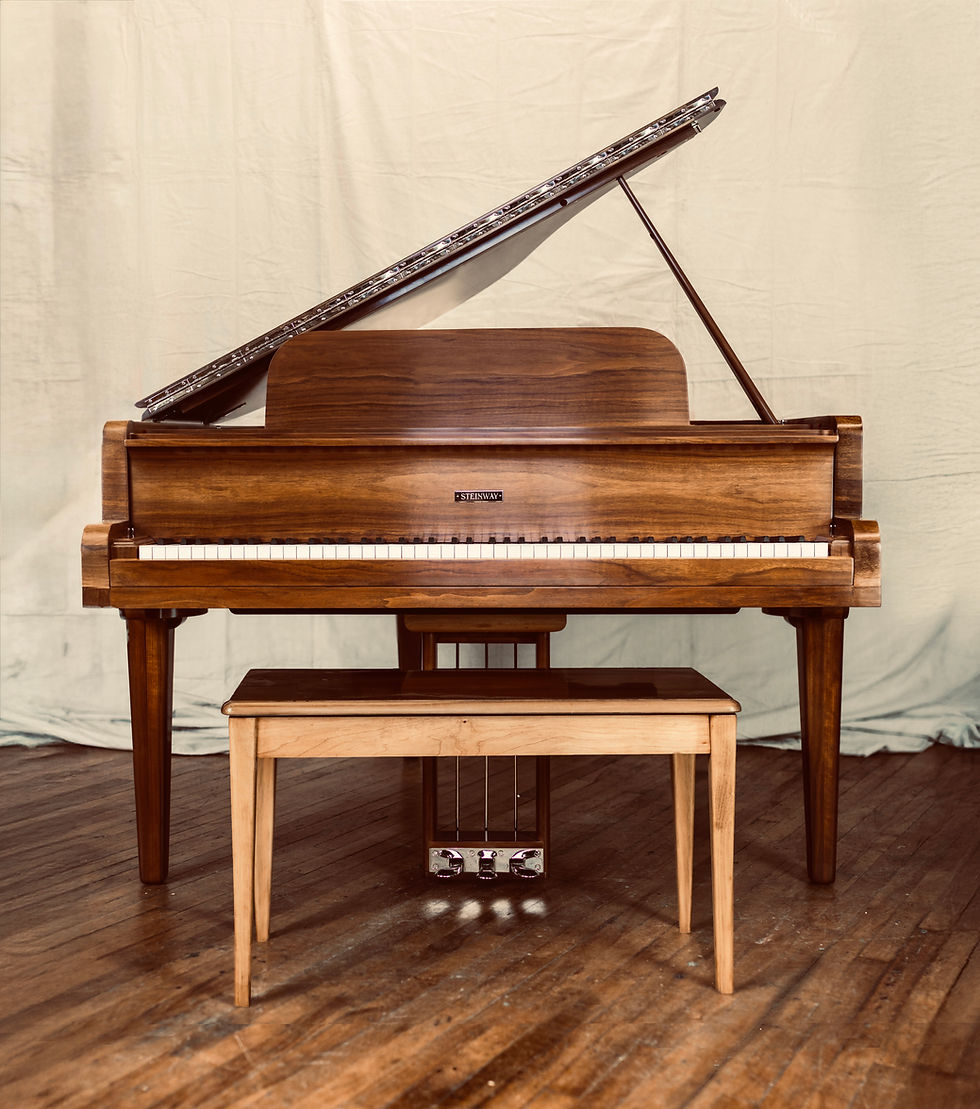
Our process begins with a meticulous examination of the piano’s original design. Nothing is assumed. Every critical dimension is carefully measured and entered into custom-built analytical programs that allow us to understand the original maker’s intent with precision. This data-driven methodology replaces guesswork and rules of thumb with calculation, clarity, and purpose.
From there, we work closely with each client to define the desired outcome. Drawing on deep experience in traditional techniques, along with a rigorous understanding of piano design and innovation, we determine where faithful preservation is appropriate and where thoughtful improvement is warranted. When a design is fundamentally sound, changes may be minimal. In other cases, strategic redesign can transform an ordinary instrument into something truly exceptional.
Because we manufacture many of our own components, we maintain unparalleled control over materials and execution. Every element—wood species, grain density, rib dimensions, and soundboard crown—is selected intentionally. Achieving materials that meet true “piano standards” is one of the most complex aspects of our work, and we address it directly by partnering with trusted sawyers who share our commitment to excellence and take pride in supplying the finest materials available.
We continually reinvest in our facilities, tools, and team, refining our processes to ensure consistency, accuracy, and superior results. When the work is done well, the value created is extraordinary—both musically and structurally.
Action Design and Restoration
Whether restoring an original action or designing a new keyboard, every action is fully drafted in AutoCAD and modeled with specific components selected to meet each client’s performance goals. This allows precise control over the variables that influence touch, playability, repetition, and tonal control.
By using customized ratios and matched key proportions, we minimize undesirable friction and reduce unnecessary front weight without compromising regulation standards or action geometry. The result is a highly accurate realization of your touch-weight objectives—whether that means greater speed and repetition, relief from repetitive stress injuries, or simply playing and sounding better than ever before.

Below is a more technical, detail-oriented rewrite intended for knowledgeable clients, technicians, and serious pianists. The language emphasizes methodology, engineering rigor, and materials science while remaining suitable for a website audience.
Design-Driven™ Remanufacturing: A Technical Overview
At Absolute Piano, Design-Driven™ remanufacturing is a systematic, analytical approach to piano rebuilding that treats the instrument as an integrated mechanical and acoustical system. Our objective is not merely restoration, but optimization—achieving performance outcomes that often exceed original factory specifications while respecting the intent of the original design.
Each project begins with a comprehensive analysis of the piano’s original architecture. No assumptions are made. Critical dimensions are measured, documented, and entered into proprietary analytical tools developed to model structural, mechanical, and acoustical relationships. This allows us to reverse-engineer the design logic of the original maker and evaluate it against modern materials, playing requirements, and performance expectations. Our process relies on calculation and modeling rather than rules of thumb.
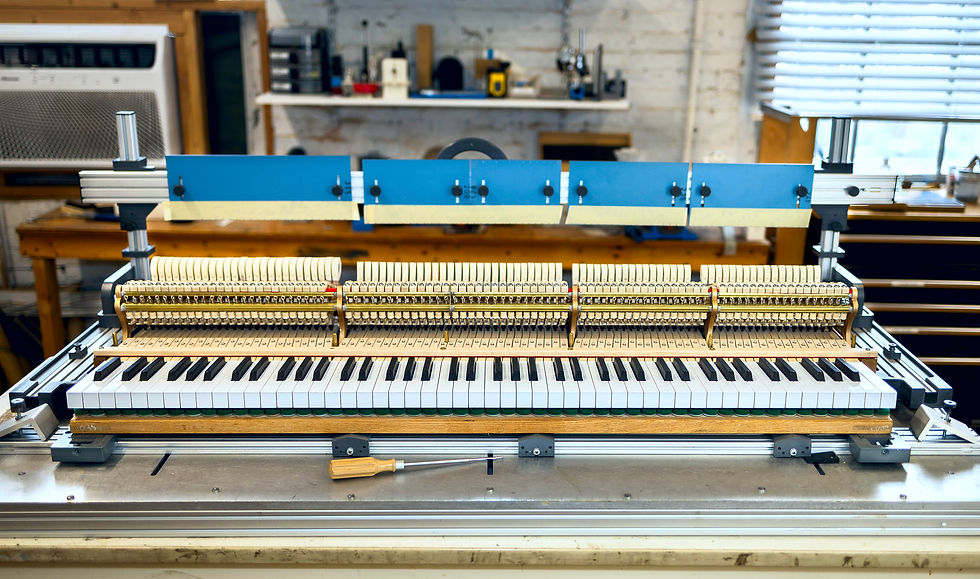
Design decisions are made in collaboration with the client and guided by clearly defined performance goals. Where the original design is sound, deviations may be minimal or unnecessary. In other cases, substantive design changes are implemented to correct inefficiencies, improve tonal balance, or enhance mechanical performance. These modifications are always deliberate, justified, and executed with a full understanding of their downstream effects on the instrument as a system.
Because we manufacture many of our own components, we maintain a high level of control over material selection and dimensional execution. Soundboard assemblies, ribs, bridges, and structural components are designed and built with specific objectives in mind. Wood species, grain orientation and density, rib geometry, and crown are selected and matched intentionally. Obtaining materials that meet true piano-grade standards is among the most demanding aspects of our work; we source directly from specialist sawyers whose selection criteria and pride align with the requirements of high-level piano rebuilding.
We continually reinvest in tooling, shop infrastructure, and personnel to support precision manufacturing and repeatable results. Process refinement and workflow optimization allow us to maintain accuracy while accommodating the inherent variability of organic materials.
Action Design and Engineering
Action restoration and design are treated as engineering problems rather than prescriptive assemblies. Whether rebuilding an original action or designing a new keyboard, each action is fully drafted in AutoCAD and modeled using the specific action parts selected for the project. This allows precise control of key ratios, leverage points, mass distribution, and frictional interfaces.
Customized ratios and matched key proportions are employed to minimize parasitic friction and reduce unnecessary front weight while preserving correct action geometry and regulation tolerances. Counterbalancing is achieved efficiently, avoiding compromises that would otherwise degrade repetition, control, or reliability.
The result is accurate targeting of touch-weight parameters tailored to the client’s needs—whether the goal is increased action velocity and repetition, reduced physical strain, enhanced tonal control, or a more refined and responsive playing experience overall.

Comments